India Overtakes China in Rice: The Productivity Challenge

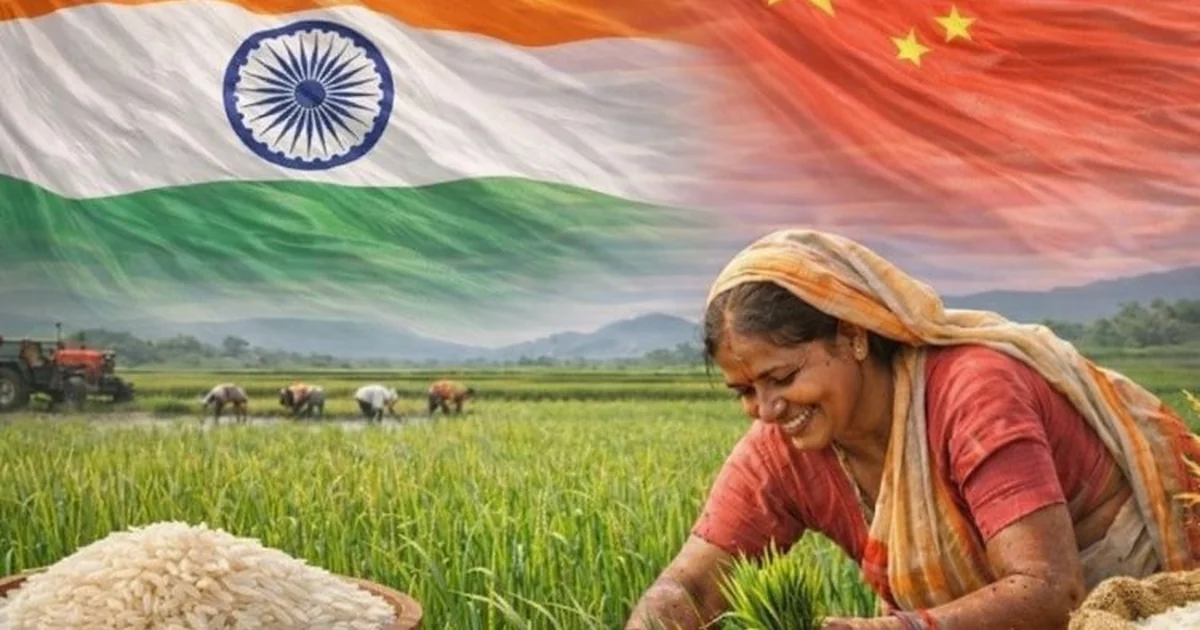
India has recently achieved a significant milestone, surpassing China to become the world’s largest rice producer. While this headline figure is a source of national pride for the agriculture sector, agricultural experts emphasize that the full story is more nuanced. This achievement largely stems from increased acreage rather than a substantial leap in yield per hectare, highlighting a critical challenge: agricultural productivity.
India’s Rise as the Top Rice Producer
Last year, India’s rice output reached an impressive 150 million tonnes, momentarily surpassing China’s 145 million tonnes. This significant achievement marks India’s emergence as the world’s leading nation in rice production. However, a deeper look reveals important context behind these figures.
The primary driver for India’s increased production has been a record expansion in cultivated land for rice. India currently dedicates about 44 million hectares to rice cultivation. In contrast, China has strategically reduced its rice acreage by nearly 4 million hectares in recent years, bringing its total down from 32 million hectares to 28 million hectares. Despite cultivating 16 million hectares less than India, China’s total rice production trails India’s by only about 5 million tonnes, underscoring a fundamental difference in efficiency.
The Crucial Gap: Productivity Tells the Real Story
While becoming the largest producer is a significant milestone, agricultural experts argue that this alone is not a sufficient benchmark for long-term agricultural sustainability. The true measure of efficiency lies in productivity per hectare.
- India’s Average Yield: India’s average paddy yield stands at approximately 3.5 tonnes per hectare, which translates to roughly 2.3 tonnes per hectare for milled rice.
- China’s Average Yield: In comparison, China records an average rice yield of around 4 tonnes per hectare.
- The Productivity Gap: In effect, China’s productivity is nearly 70% higher than India’s on a comparable basis, highlighting a substantial structural gap between the two nations.
Bridging this productivity gap with countries like China is considered a more meaningful and sustainable objective for India’s agriculture sector. Furthermore, India has been actively attempting to rationalize rice acreage, especially in water-stressed regions such as Punjab, Haryana, western Uttar Pradesh, and Telangana. Excessive groundwater extraction for intensive paddy cultivation has intensified pressure on precious water resources, making sustainable productivity crucial.
Empowering Farmers for Higher Yields and Sustainable Agriculture
To truly solidify its position as a global agricultural powerhouse, India must focus on enhancing per-hectare productivity and promoting sustainable farming practices. This involves a multi-pronged approach that empowers farmers with knowledge, technology, and financial support.
Key areas for improvement include:
* Advanced Seed Varieties: Promoting the adoption of high-yielding, disease-resistant, and climate-resilient seed varieties that can thrive in local conditions.
* Efficient Resource Management: Implementing precision irrigation techniques like drip and sprinkler systems, and promoting judicious use of fertilizers based on soil analysis. Understanding your field’s needs through a Soil Health Card is vital for optimal nutrient management.
* Modern Mechanization: Increasing access to and adoption of modern farm machinery to enhance efficiency, reduce labor costs, and improve timeliness of farming operations. Schemes like the PM Kisan Tractor Scheme can help farmers acquire necessary equipment.
* Access to Credit: Ensuring farmers have timely access to affordable credit for purchasing quality inputs, machinery, and adopting new technologies. The Kisan Credit Card scheme remains a crucial support system for this.
* Knowledge Transfer: Strengthening agricultural extension services to disseminate best practices, provide training on advanced farming techniques, and facilitate knowledge sharing among farmers.
* Crop Diversification: Encouraging farmers in water-stressed regions to diversify into less water-intensive crops, easing pressure on groundwater resources and promoting agricultural resilience.
By focusing on these strategic interventions, India can move beyond just being the largest producer to becoming the most efficient and sustainable producer, ensuring long-term prosperity for its farmers and food security for the nation.
Frequently Asked Questions
Last year, India’s rice output reached 150 million tonnes, surpassing China’s 145 million tonnes to become the world’s largest producer. This marks a significant milestone in India’s agricultural journey, showcasing its capacity to contribute substantially to global food supplies.
While the overall production figure is high, it’s largely due to India cultivating rice across a record 44 million hectares, significantly more land than China’s 28 million hectares. Experts caution that this expansion in acreage, particularly in water-stressed regions, raises concerns about resource sustainability and lower productivity compared to China.
India’s average paddy yield is about 3.5 tonnes per hectare (roughly 2.3 tonnes for milled rice), whereas China records an average yield of around 4 tonnes per hectare. This means China’s productivity is nearly 70% higher than India’s, indicating a substantial structural gap in agricultural efficiency.
Farmers can improve productivity by adopting high-yielding seed varieties, utilizing efficient irrigation and soil nutrient management based on Soil Health Cards, embracing modern farm mechanization with support from schemes like the PM Kisan Tractor Scheme, and accessing timely credit through the Kisan Credit Card scheme for crucial investments in farm inputs and technology.