Kisan Credit Card: RBI Raises Collateral-Free Loan Limit

The Reserve Bank of India (RBI), in coordination with the Finance Ministry, has announced significant measures to ensure a seamless flow of credit to India’s rural sector, particularly benefiting farmers. A key change for the Kisan Credit Card scheme is the increase in the collateral-free short-term agricultural loan limit from ₹1.60 lakh to ₹2.00 lakh per borrower, effective from January 1, 2025. This move aims to enhance financial access for farmers, especially Small and Marginal Farmers (SMFs), and Self-Help Groups (SHGs), strengthening the overall agricultural credit ecosystem.
This update means more farmers can now access higher credit amounts without needing collateral, which is a crucial step towards reducing their financial burden and supporting their productive requirements. Farmers currently holding a KCC or planning to apply should be aware of this upcoming change and discuss the enhanced limits with their banks closer to the implementation date.
What is the Kisan Credit Card (KCC) Scheme?
The Kisan Credit Card (KCC) scheme is a pioneering initiative launched by the Government of India in collaboration with RBI and NABARD to provide comprehensive credit support to farmers. It offers timely and adequate credit for their agricultural needs, including cultivation expenses, post-harvest expenses, produce marketing loans, and working capital for allied activities like dairy, poultry, and fisheries. The KCC aims to liberate farmers from the clutches of informal money lenders and ensure institutional credit is easily accessible.
Latest Updates and Key Measures for Rural Credit Flow
The Finance Ministry highlights that the Government and RBI are actively working to maintain sufficient liquidity in the banking system, ensuring that the productive requirements of the economy, especially the rural sector, are met. Several policy instruments are in play:
- Increased Collateral-Free Loan Limit: The most significant update is the enhancement of the collateral-free short-term agricultural loan limit to ₹2.00 lakh per borrower, effective January 1, 2025. This directly impacts the Kisan Credit Card scheme, allowing farmers to borrow more without providing security.
- Priority Sector Lending (PSL) Guidelines: RBI’s PSL guidelines mandate commercial banks (including Regional Rural Banks, Small Finance Banks, and Co-operative Banks) to allocate at least 18% of their Adjusted Net Bank Credit (ANBC) to agriculture. Out of this, a sub-target of 10% is specifically prescribed for Small and Marginal Farmers.
- Ground Level Agriculture Credit (GLC) Targets: The Government sets GLC targets for banks, further driving institutional credit to the agricultural sector.
- Incentive and Disincentive Framework: An incentive framework encourages credit flow to districts with historically lower priority sector credit. Conversely, a disincentive framework promotes a more equitable distribution of credit in districts with higher priority sector lending, ensuring wider reach and balanced development.
What This Means for Farmers: Kisan Portal Analysis
The recent measures, particularly the increase in the collateral-free loan limit under the Kisan Credit Card scheme, represent a substantial boost for Indian farmers. Raising the limit to ₹2.00 lakh acknowledges the increasing input costs and working capital needs of agriculture. This change, effective January 1, 2025, will significantly ease access to credit for many small and marginal farmers who struggle with collateral requirements. It will encourage more farmers to utilize formal banking channels, reducing their reliance on costly informal credit sources. Additionally, the continued emphasis on PSL and targeted lending to SMFs reinforces the government’s commitment to inclusive agricultural growth and financial stability in rural India.
Eligibility for Kisan Credit Card
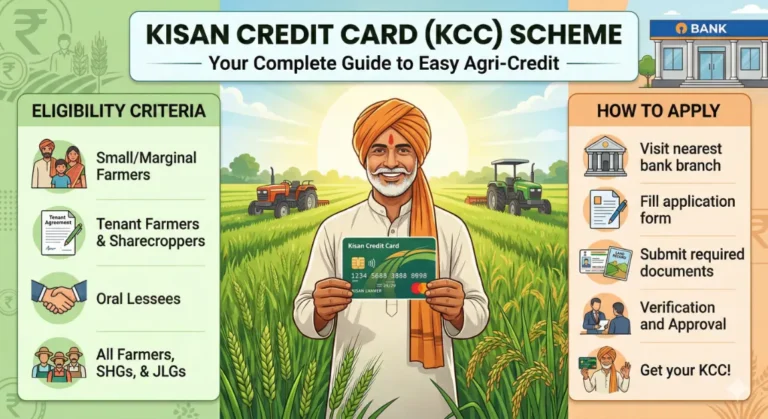
While specific criteria can vary slightly between banks, general Kisan Credit Card eligibility requirements are:
- Farmers – individuals/joint borrowers who are owner cultivators.
- Tenant farmers, oral lessees & sharecroppers.
- Self Help Groups (SHGs) or Joint Liability Groups (JLGs) of farmers including tenant farmers, sharecroppers, etc.
- Age of the applicant should generally be between 18 to 75 years. For applicants above 60 years, a co-borrower might be required.
Documents Required for Kisan Credit Card
When applying for a Kisan Credit Card, farmers generally need to furnish the following Kisan Credit Card documents required:
- Duly filled application form.
- Identity proof (Aadhaar Card, PAN Card, Voter ID, Passport, etc.).
- Address proof (Aadhaar Card, Driving License, Utility bills, etc.).
- Land documents (Proof of land ownership/cultivation – copy of Khasra, Khatauni, Jamabandi, etc.).
- Passport-size photographs.
- Any other documents required by the bank (e.g., declaration of no outstanding loan from any other bank).
For additional schemes that support farmers’ income, you can learn more about the PM Kisan scheme.
How to Apply for Kisan Credit Card
Applying for a Kisan Credit Card involves a straightforward process:
- Obtain Application Form: Visit your nearest public sector bank, Regional Rural Bank (RRB), or cooperative bank branch and ask for the KCC application form. Many banks also provide online application forms on their Kisan Credit Card official website portals.
- Fill the Form: Carefully fill out the application form with accurate details regarding your landholding, crop pattern, and credit requirements.
- Attach Documents: Gather all the necessary documents mentioned above and attach self-attested copies with the application form.
- Submit Application: Submit the complete application form along with the documents at the bank branch.
- Verification: The bank will verify your application and land records. They may also conduct a field visit.
- Sanction and Disbursement: Upon successful verification, your KCC will be sanctioned, and the credit limit will be disbursed.
For comprehensive details on other agricultural insurance benefits, refer to the Pradhan Mantri Fasal Bima Yojana.
Kisan Credit Card Status Check and Further Assistance
Once you apply, you can typically check your application status by contacting the bank branch directly where you submitted the application. Many banks also offer online portals or customer service numbers for Kisan Credit Card status check inquiries. If you face any issues or have questions regarding your KCC, you can always approach the bank’s customer service desk or their dedicated agricultural lending department. You can also refer to official government agricultural portals for guidance. For more official information and notifications, farmers can check the Press Information Bureau website: pib.gov.in.
Next Steps for Farmers
As the collateral-free limit increases from January 1, 2025, farmers should:
- Stay Informed: Keep an eye on official notifications from banks and the RBI regarding the implementation of the new limit.
- Engage with Banks: Discuss the enhanced credit limits and potential for increasing your existing KCC limit or applying for a new one.
- Utilize the Increased Limit: Plan your agricultural activities to leverage the higher credit availability, which can help in procuring better inputs and managing expenses more effectively.
This proactive approach by the government and RBI is set to further strengthen the financial backbone of India’s rural economy through the Kisan Credit Card scheme.