
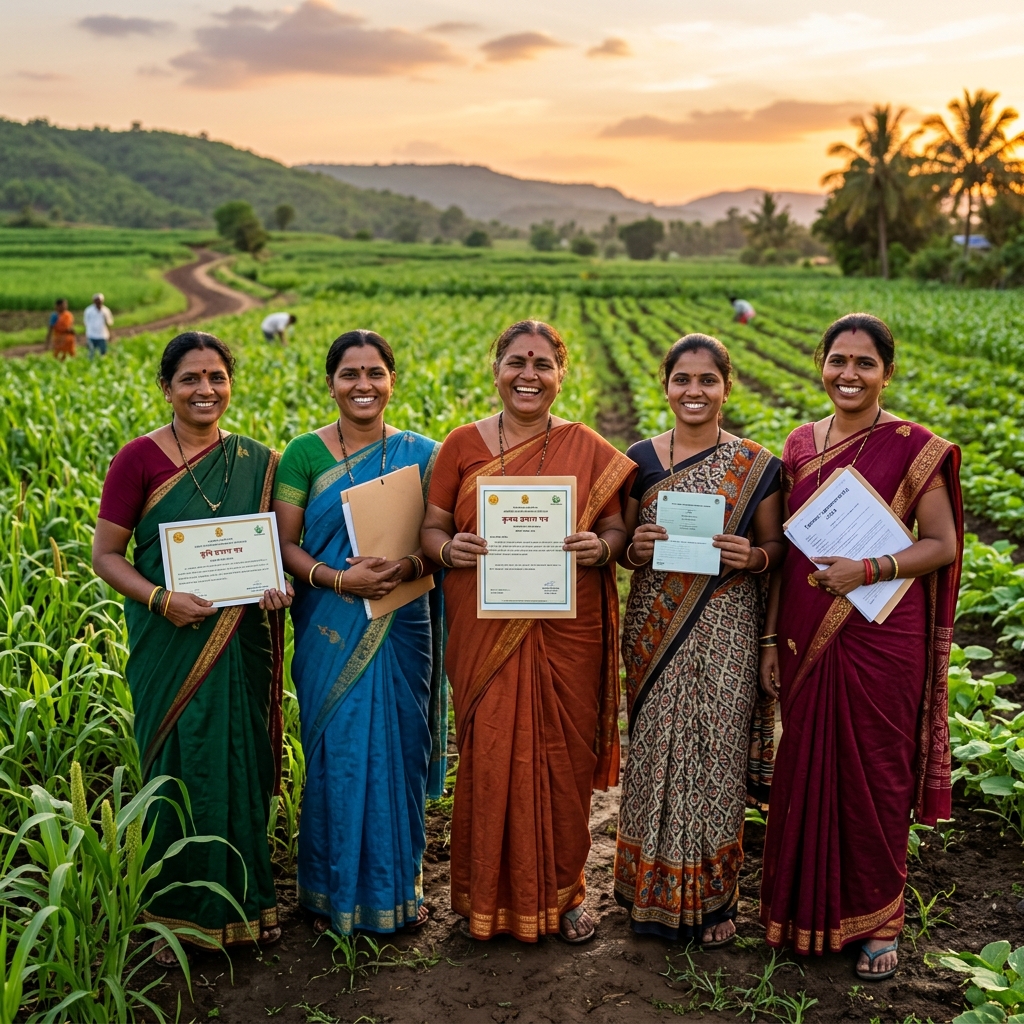
Maharashtra Women Farmers Empowerment Bill 2026: Revolutionizing Rural Livelihoods

Unveiling the Maharashtra Women Farmers Empowerment Bill 2026: A Landmark Initiative
Maharashtra, a leading agricultural state in India, is poised for a significant legislative change that promises to redefine the landscape for its female agricultural workforce. The much-anticipated **Maharashtra Women Farmers Empowerment Bill 2026** is scheduled to be introduced during the Monsoon Session of the State Assembly, commencing on June 22, 2026. This progressive legislation aims to tackle long-standing disparities faced by women in agriculture, ensuring their crucial contributions are formally recognized, supported, and adequately rewarded.
Despite forming a substantial portion of the agricultural labor force, women farmers in Maharashtra, like many across India, often remain “invisible” in official records. This lack of formal recognition translates into limited access to institutional credit, government schemes, and land ownership rights, perpetuating a cycle of economic vulnerability. The upcoming `women farmers empowerment bill maharashtra` seeks to dismantle these barriers and pave the way for a more equitable and prosperous future for rural women.
Addressing the Gender Gap in Agriculture: Why the Bill is Crucial
The role of women in Indian agriculture is undeniable, from sowing and transplanting to harvesting, post-harvest operations, and livestock management. However, land, the most critical asset in agriculture, predominantly remains in the names of male family members. This systemic issue deprives women of agency, collateral for loans, and eligibility for numerous farmer-centric schemes. The consequences are far-reaching, impacting not only individual women but also household stability and overall agricultural productivity. The **Women Farmers Empowerment Bill 2026** emerges as a critical intervention to rectify these historical imbalances and ensure that the hands that feed the nation are adequately empowered.
Pillars of Empowerment: Key Objectives of the Maharashtra Women Farmers Empowerment Bill 2026
The core of the `women farmers empowerment bill maharashtra` lies in its comprehensive approach to address multiple facets of disempowerment. The bill outlines several primary objectives, each designed to provide robust support and opportunities for women farmers.
Legal Recognition for Female Farmers: Ending the ‘Invisible’ Labor
One of the most foundational aspects of the **Maharashtra Women Farmers Empowerment Bill 2026** is its focus on providing legal recognition to female farmers. Currently, many women who actively cultivate land are not formally identified as farmers, especially if the land is not registered in their name. This bill aims to establish a clear legal framework to acknowledge women as farmers, irrespective of their land ownership status. This recognition will open doors for them to access various government initiatives, social security benefits, and participate in decision-making bodies, moving them from the periphery to the mainstream of agricultural policy.
Joint Land Registration Rules: Securing Ownership and Identity
A cornerstone of empowering women in agriculture is ensuring their right to land ownership. The new bill proposes progressive joint land registration rules. This provision will encourage, and in some cases mandate, the registration of agricultural land in the joint names of spouses or other female family members. By making women co-owners of land, the bill seeks to provide them with:
* **Legal Security:** Enhanced protection against eviction and greater control over agricultural assets.
* **Access to Credit:** Joint ownership serves as valuable collateral, improving women farmers’ eligibility for institutional loans.
* **Scheme Eligibility:** Direct access to government subsidies, compensation for crop loss, and other benefits that often require land ownership as a prerequisite.
Crucially, with joint ownership, women farmers gain a significant advantage in accessing financial relief schemes. For instance, they can now more effectively leverage benefits under initiatives like the Maharashtra Karj Mafi List 2026, ensuring their share of the agricultural burden is acknowledged and supported during times of distress. This integration of women into the formal land ownership system is a monumental step towards their economic independence.
Enhanced Subsidies and Direct Benefits: Boosting Agricultural Productivity
To further incentivize and support women in agriculture, the `women farmers empowerment bill maharashtra` will introduce provisions for enhanced subsidies and direct benefits specifically for female farmers. These may include:
* **Higher Subsidy Rates:** Greater financial assistance for agricultural inputs like seeds, fertilizers, and pesticides.
* **Priority for Farm Machinery:** Subsidized access to modern farm equipment and technology.
* **Special Schemes:** Dedicated programs for women-led self-help groups (SHGs) involved in agriculture, value addition, and agro-processing.
* **Irrigation and Water Management:** Preferential treatment in accessing irrigation facilities and subsidies for water conservation measures.
These targeted subsidies aim to reduce the financial burden on women farmers, improve their access to modern agricultural practices, and ultimately boost their productivity and income.
Priority Institutional Credit Access: Fueling Growth and Self-Reliance
Access to timely and affordable credit remains a major challenge for women farmers, who often rely on informal moneylenders at exorbitant interest rates. The **Maharashtra Women Farmers Empowerment Bill 2026** addresses this by mandating priority access to institutional credit for female farmers. This would involve:
* **Lower Interest Rates:** Special interest rates on agricultural loans from cooperative banks, regional rural banks, and commercial banks.
* **Simplified Loan Procedures:** Streamlined application processes and reduced documentation requirements.
* **Credit Guarantees:** Government-backed guarantees to encourage financial institutions to lend to women farmers.
* **Financial Literacy Programs:** Initiatives to educate women farmers about banking procedures, loan products, and financial management.
By ensuring priority access to credit, the bill empowers women to invest in their farms, adopt better technologies, diversify their crops, and transition from subsistence farming to more profitable ventures, fostering self-reliance.
Impact and Future Outlook: A New Dawn for Maharashtra’s Women Farmers
The enactment of the **Women Farmers Empowerment Bill 2026** is expected to usher in a new era for women in Maharashtra’s agricultural sector. The anticipated impacts are multi-faceted:
* **Economic Upliftment:** Increased income, financial stability, and reduced dependence on male family members.
* **Social Empowerment:** Enhanced status within the family and community, greater participation in decision-making.
* **Improved Food Security:** Empowered women farmers often invest more in family nutrition and education, leading to healthier households.
* **Sustainable Agriculture:** Women farmers are often at the forefront of adopting sustainable practices, and their empowerment can drive broader environmental benefits.
The bill’s holistic approach, addressing legal, financial, and social dimensions, makes it a truly transformative piece of legislation. It recognizes that empowering women farmers is not just a matter of social justice but a crucial strategy for achieving overall agricultural growth and rural development in Maharashtra.
Addressing Potential Challenges and Implementation Strategies
While the intent behind the `women farmers empowerment bill maharashtra` is commendable, successful implementation will depend on robust strategies to overcome potential challenges. These may include:
* **Awareness Campaigns:** Extensive outreach programs to inform women farmers about their new rights and benefits.
* **Capacity Building:** Training programs to equip women with financial literacy, modern farming techniques, and entrepreneurial skills.
* **Bureaucratic Streamlining:** Simplifying application processes for schemes and credit to reduce hurdles.
* **Monitoring and Evaluation:** Regular assessment of the bill’s impact to ensure its objectives are met and to make necessary adjustments.
* **Cultural Sensitization:** Efforts to address patriarchal attitudes and resistance to joint land ownership at the community level.
Conclusion: A Step Towards Inclusive Agricultural Growth
The upcoming Maharashtra Women Farmers Empowerment Bill 2026 represents a pivotal moment in the state’s journey towards inclusive and equitable agricultural development. By providing legal recognition, promoting joint land ownership, offering enhanced subsidies, and ensuring priority access to institutional credit, the bill lays a strong foundation for the empowerment of female farmers. This landmark legislation is not merely about granting rights; it is about acknowledging the indispensable role of women in feeding the state and the nation, and providing them with the tools and support necessary to thrive. As Maharashtra prepares for the Monsoon Session, the hope is that this bill will indeed light up a new path for countless women, transforming their lives and strengthening the very fabric of rural Maharashtra.
