Indian Agriculture: Record Foodgrain Production 2025-26

The Ministry of Agriculture and Farmers Welfare has released its Second Advance Estimates for 2025-26, projecting a record-breaking year for agriculture with unprecedented foodgrain production. This significant update indicates a strong performance driven by higher output of key crops like rice, wheat, and maize, surpassing previous years’ levels. For Indian farmers, this forecast signals potential market stability and underscores the success of various agricultural initiatives.
India’s Record-Breaking Agriculture Production in 2025-26
India’s foodgrain production is set to achieve record levels in 2025-26, according to the latest Second Advance Estimates. Both Kharif (monsoon) and Rabi (winter) foodgrain productions have shown remarkable growth, exceeding last year’s figures by over 45-50 million tonnes. This robust outlook is a testament to the resilience and hard work of farmers across the nation, supported by favorable climatic conditions and government policies.
- Total Kharif Foodgrain Production: Estimated at 1741.44 Lakh Metric Tonnes (LMT), a significant 2.8% increase (46 LMT) compared to the previous year’s 1694.60 LMT.
- Total Rabi Foodgrain Production: Estimated at 1745.13 LMT, marking a 3.2% increase (53 LMT) over last year’s 1691.66 LMT.
These figures paint a very strong picture for the overall agriculture sector, promising enhanced food security and potential for higher farmer income.
Key Crop Highlights: Rice, Wheat, and Maize Lead the Way
The impressive growth in foodgrain production is primarily fueled by exceptional performances from staple crops, particularly rice, wheat, and maize.
- Rice Production:
- Kharif Rice: Estimated at 1239.28 LMT, an increase of 11.56 LMT from 1227.72 LMT in 2024-25.
- Rabi Rice: Estimated at 167.20 LMT.
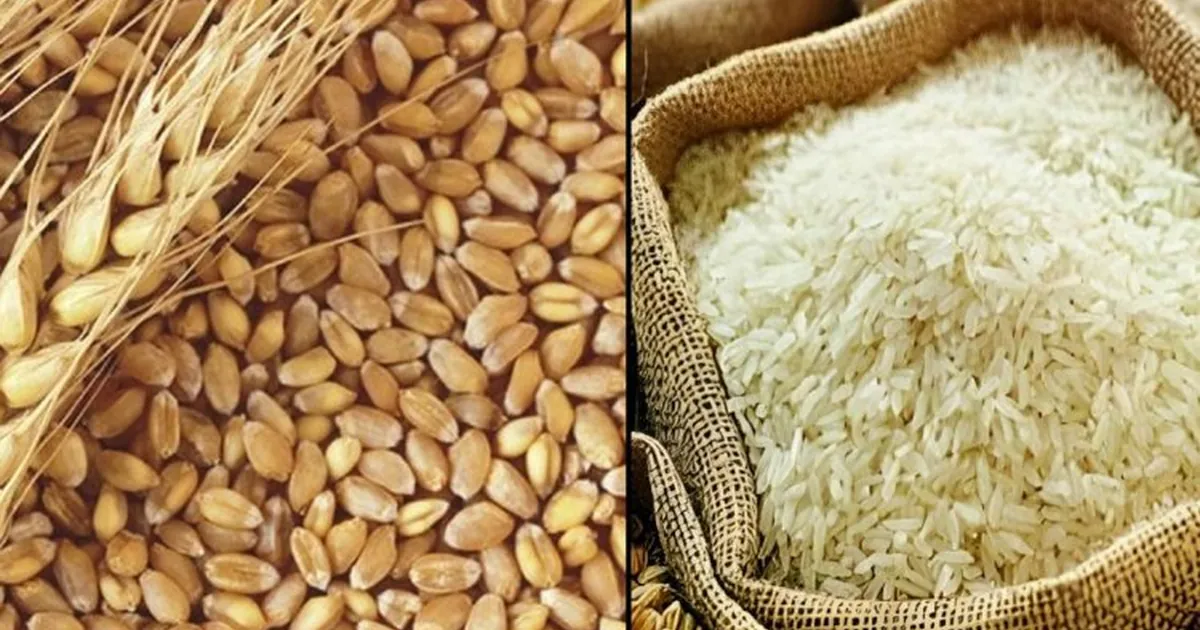
- Wheat Production: Projected at 1202.10 LMT, which is 22.65 LMT higher than the previous year’s production of 1179.45 LMT.
- Maize Production: Both Kharif and Rabi maize productions are at record levels, contributing significantly to nutri/coarse cereals growth.
- Kharif Maize: Estimated at a record 302.47 LMT.
- Rabi Maize: Estimated at a record 159.03 LMT.
This strong growth in key cereal crops ensures a steady supply for domestic consumption and could bolster India’s position in global markets. The “Shree Anna” (Nutri/Coarse Cereals) segment also saw healthy growth, with Kharif production estimated at 425.89 LMT and Rabi at 213.41 LMT.
Pulses and Oilseeds: A Closer Look
Beyond cereals, the estimates also provide insights into the production of pulses and oilseeds, crucial for nutritional security and edible oil supply.
- Pulses:
- Tur (Pigeon Pea): Estimated at 34.55 LMT.
- Gram (Chickpea): Estimated at 117.92 LMT.
- Lentil: Estimated at 17.33 LMT.
- Oilseeds (Groundnut):
- Kharif Groundnut: Estimated at 112.94 LMT, an increase of 8.82 LMT compared to the previous year.
- Rabi Groundnut: Estimated at 7.97 LMT.
What These Estimates Mean for Indian Farmers
These record production estimates are excellent news for the agriculture sector. For individual farmers, a robust harvest generally translates to improved market supply, potentially stable prices, and better income prospects. It also signifies the effectiveness of various government schemes designed to support agricultural productivity and farmer welfare. Schemes like the PM Kisan Samman Nidhi, which provides direct income support, become even more impactful when combined with strong production. Farmers can also explore options like the Pradhan Mantri Fasal Bima Yojana (PMFBY) to safeguard their income against unforeseen crop losses, ensuring resilience even in prosperous times.
Government Support for Robust Agriculture
The consistent growth in agriculture is a direct result of comprehensive government strategies aimed at empowering farmers. Initiatives range from providing access to credit through the Kisan Credit Card scheme, promoting advanced farming techniques, ensuring irrigation facilities, and offering market linkages. These efforts collectively contribute to the sector’s stability and growth, encouraging farmers to adopt modern practices and increase yield.
Outlook and Future of Indian Agriculture
The 2nd Advance Estimates for 2025-26 underscore a bright future for Indian agriculture. With sustained efforts in research, infrastructure development, and farmer-centric policies, the nation is well-positioned to maintain its trajectory of growth, ensuring food security for its vast population and enhancing the prosperity of its farming communities. Continued innovation and support will be key to navigating future challenges and maximizing the potential of this vital sector.
Frequently Asked Questions
What are the 2nd Advance Estimates for agriculture in 2025-26?
The 2nd Advance Estimates released by the Ministry of Agriculture and Farmers Welfare project record foodgrain production for 2025-26. This includes significant increases in both Kharif and Rabi foodgrain output, driven primarily by higher production of rice, wheat, and maize.
Which crops are leading the growth in Indian foodgrain production?
Rice, wheat, and maize are the primary crops contributing to the record foodgrain production. Wheat production is estimated at 1202.10 LMT, while Kharif rice is projected at 1239.28 LMT. Both Kharif and Rabi maize productions are at record levels, showing robust growth.
How does this record production impact farmers?
For farmers, record production estimates can lead to improved market supply, potentially stable or better prices, and overall enhanced income prospects. It also reflects the positive impact of government support schemes and favorable agricultural conditions.
What are the estimated figures for Kharif and Rabi foodgrain production?
Kharif foodgrain production is estimated at 1741.44 LMT, an increase of 2.8% over the previous year. Rabi foodgrain production is projected at 1745.13 LMT, showing a 3.2% increase compared to last year’s figures. Both seasons demonstrate strong growth in output.